When Your Body Won't Let You Rest: Chronic Illness, Chronic Pain, and Anxiety
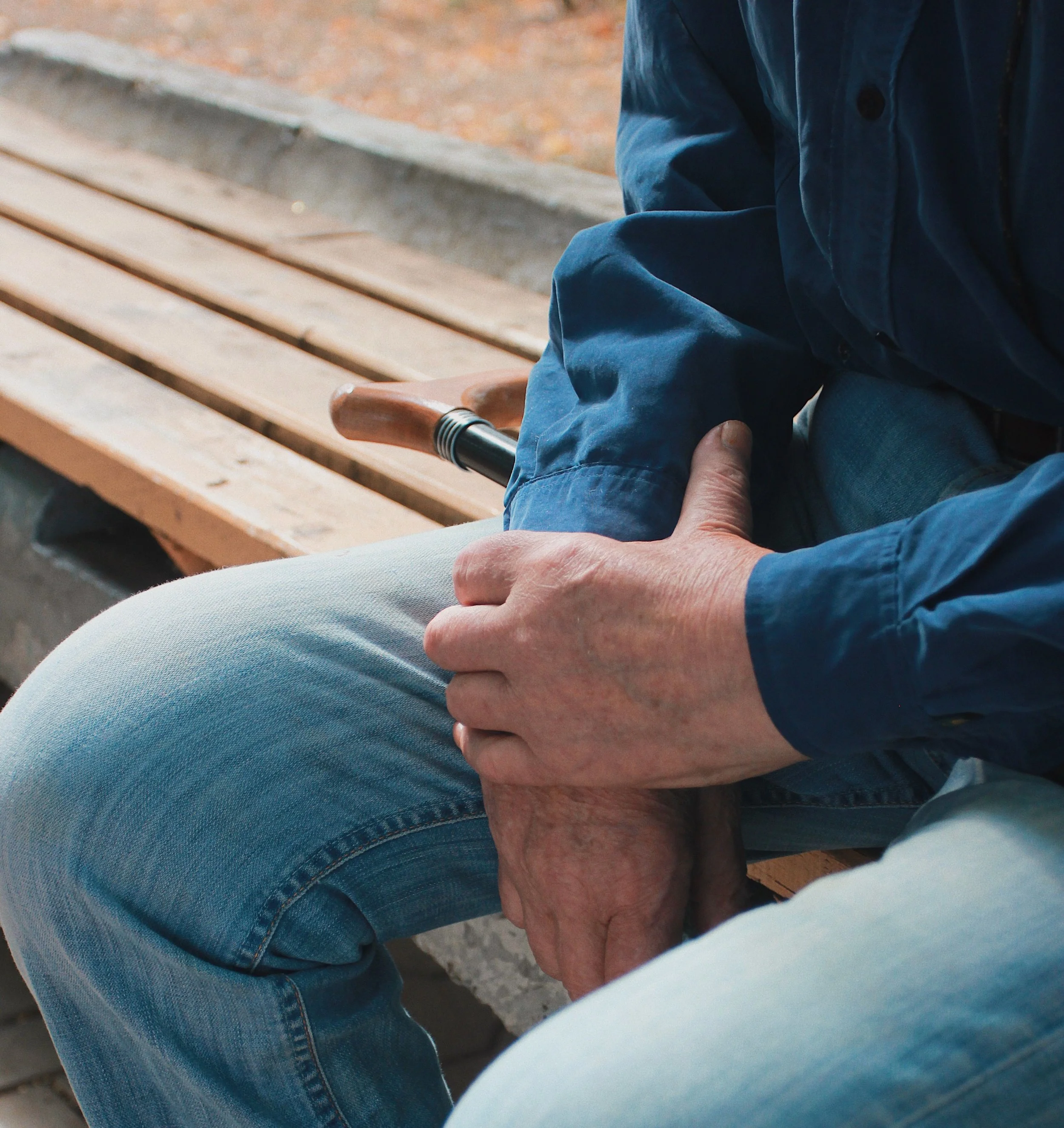
You've probably had this thought before: Is this feeling in my body real, or am I overreacting?
If you're living with a chronic illness or chronic pain, that question can run on a loop. Every twinge, every wave of fatigue, every unpredictable flare becomes something to monitor, interpret, and brace for. Over time, that constant vigilance doesn't stay contained to your body. It becomes anxiety.
This isn't a coincidence, and it isn't a personal failing. It's one of the most well-documented patterns in mental health research, and it's also one of the most under-treated.
The Research Behind What You're Feeling
Chronic illness and anxiety show up together far more often than most people realize. Large-scale studies have found that a majority of people managing chronic conditions report clinically significant stress and anxiety alongside their physical symptoms, with one recent cross-sectional study finding stress present in roughly two-thirds of chronic disease patients and anxiety in about half. Other research has shown that anxiety comorbid with a chronic medical condition tends to affect quality of life even more than anxiety paired with depression alone, with the drop in day-to-day functioning being especially pronounced when anxiety accompanies an ongoing physical illness.
The relationship also runs in both directions. Longitudinal research tracking people over time has found that anxiety and depression are linked not just to a single chronic condition, but to a faster buildup of additional chronic conditions over the years that follow, suggesting that the biological toll of prolonged anxiety compounds the risk of new physical illness rather than staying separate from it. And for chronic pain specifically, population research has found a meaningful overlap between pain that persists most days for six months or more and clinically significant anxiety or depression, with that overlap connected to worse health behaviors and outcomes overall.
In plain terms: your nervous system doesn't file "physical" and "emotional" into separate folders. When your body has been unpredictable or in pain for a long time, your mind adapts by staying on alert — and that adaptation, while protective at first, eventually becomes its own source of suffering.
Why "Just Manage Your Anxiety" Doesn't Work Here

Most anxiety treatment assumes the threat is imagined or exaggerated — that the work is to recognize a thought is distorted and let it go. But if you live with a chronic illness, your body actually has produced real, unpredictable symptoms before. Your vigilance was never irrational. It was accurate, for a long time. That's part of why generic coping tools so often fall flat for this specific kind of anxiety: they ask you to talk yourself out of a threat that was, at some point, genuinely there.
This is where a parts-based approach like Internal Family Systems (IFS) tends to work differently than standard anxiety treatment. Rather than treating vigilance as a distorted thought to correct, IFS treats it as a protective part of you — one that took on a job a long time ago and hasn't yet been told it can stand down. Emerging clinical research has identified IFS as a promising approach specifically for conditions involving chronic pain, alongside trauma and depression, noting meaningful symptom reduction in early trials.
In practice, this means we don't start by asking you to think differently about your symptoms. We start by getting curious about the part of you that's been scanning your body for the last flare, the part that translates every ache into a plan, the part that's exhausted from being "the strong one" while still managing something invisible to everyone else. We ask what that vigilance has been protecting you from — and only then does it become possible for your system to actually rest.
What This Looks Like in Practice
For many of the high-functioning adults I work with, the anxiety tied to chronic illness rarely looks like textbook panic. It looks like:
Researching your condition late at night even when nothing has changed
Minimizing your symptoms to others so you don't become "too much"
Feeling like you have to earn rest, or justify it, even when your body is asking for it
A body that stays braced even during calm moments, because calm has been unreliable before
None of this means something is wrong with you. It means your nervous system learned, accurately, that vigilance kept you safer for a while. The work isn't to override that. It's to help your system learn that it's allowed to soften now — even while the underlying illness is still part of your life.
If This Is Familiar
If you're managing a chronic illness or chronic pain and you're exhausted from carrying the anxiety that comes with it — not just the illness itself — you don't have to keep explaining or justifying what that's like before getting support. I offer virtual therapy sessions across New York State, working specifically with high-functioning adults whose anxiety lives in the body alongside a health condition, using IFS and trauma-informed approaches.
If this has named something you have been carrying: the monitoring, the bracing, the exhaustion of a body that won't let you rest even when you want to, this is some of the most specific work I do.

My practice at My AP Therapy is built for high-functioning adults in New York City and Westchester whose anxiety lives in the body alongside a health condition. Anxiety and chronic illness therapy is where most people start. If the life transition dimension of your experience resonates as strongly as the anxiety, life transitions and chronic illness therapy speaks to that specifically.
A free 15-minute consultation is a low-pressure conversation to understand what you are carrying and whether this work feels like the right fit.
Schedule a Free Consultation →
Amanda Phillips, LCSW is a Certified Clinical Trauma Professional and IFS Level 1 trained therapist offering anxiety and chronic illness therapy in New York City and Westchester. Virtual therapy available throughout New York State.
Frequently Asked Questions About Chronic Illness and Anxiety
-
When the body has been unpredictable or in pain for an extended period, the nervous system adapts by staying on alert. That vigilance is not irrational — it developed in response to real and recurring physical threat. Over time however, the monitoring itself becomes a source of ongoing anxiety that persists even during periods of relative physical stability. Research has found that a majority of people managing chronic conditions report clinically significant anxiety alongside their physical symptoms, and that the relationship between anxiety and chronic illness runs in both directions — each one compounding the other over time.
-
Most standard anxiety therapy assumes the threat is imagined or exaggerated and focuses on cognitive reframing. For someone living with chronic illness, the threat was never imagined — the body has genuinely been unpredictable. That's why IFS-informed therapy tends to work differently here. Rather than asking you to think differently about your symptoms, it gets curious about the parts of you that have been doing the vigilance work, and what they would need to finally feel safe enough to soften. That's a fundamentally different orientation from cognitive behavioral approaches.
-
No. I work with people at every stage, including those managing stable chronic conditions where the anxiety has outlasted the acute phase, those in active treatment, and those navigating the long-term identity and emotional weight of a condition that doesn't resolve. Virtual delivery means sessions are accessible on harder days without the energy cost of travel.
-
The experience of being disbelieved or minimized by the healthcare system does something specific to the nervous system and to self-trust. It is its own form of harm that shows up in therapy as a reluctance to trust physical sensations, over-explaining, and chronic self-doubt. That experience is something I understand and work with directly, not as a side note but as a central part of what many people navigating chronic illness are carrying.
-
Research consistently shows that the relationship between anxiety and chronic illness runs in both directions. Prolonged anxiety affects immune function, inflammatory markers, pain perception, and sleep, all of which can affect the course of chronic conditions over time. Addressing the anxiety dimension of the experience is not separate from caring for the physical condition — for many people it is a meaningful part of the whole picture.
-
Yes. All sessions at My AP Therapy are conducted virtually across New York State. For people managing fatigue, pain flares, or unpredictable physical symptoms, virtual therapy removes the access barrier of travel without compromising the depth or quality of the work. Many clients find that being in their own environment supports the kind of grounded, body-aware work we do together.
References
The inline citations in this post reference the following peer-reviewed sources:
Swathi, P.K., et al. (2023). Prevalence and correlates of stress, anxiety, and depression in patients with chronic diseases: a cross-sectional study. Middle East Current Psychiatry, 30, 66. https://doi.org/10.1186/s43045-023-00340-2
Sherbourne, C.D., et al. (1996). Comorbid anxiety disorder and the functioning and well-being of chronically ill patients of general medical providers. Archives of General Psychiatry, 53(10), 889-895. https://pubmed.ncbi.nlm.nih.gov/8857865/
Scott, K.M., et al. (2016). Association of mental disorders with subsequent chronic physical conditions: world mental health surveys from 17 countries. JAMA Psychiatry, 73(2), 150-158. https://doi.org/10.1001/jamapsychiatry.2015.2688
Nuttall, F.Q., et al. (2024). Chronic pain-mental health comorbidity and excess prevalence of health risk behaviours: a cross-sectional study. Primary Health Care Research and Development, 25, e16. https://doi.org/10.1017/S1463423624000136
Buys, M.E. (2025). Exploring the evidence for Internal Family Systems therapy: a scoping review of current research, gaps, and future directions. Clinical Psychologist. https://doi.org/10.1080/13284207.2025.2533127
